Military School Alternative

Military School Alternative to Public Education

public educationMilitary school as an alternative to public education is something that has taken on a new life in recent years.  The lamenting of public education is not a subject that is new and if you Google “failure of public education” you may be surprised at the number of articles that will appear.  Many of these articles are not new and go back several years.  The article “The Failure of American Public Education” was first published in February 1993 and many of the points made in the article still apply in today’s public education system.  Surprisingly, many of the articles indicate that private schools for the most part are not plagued with many of the problems associated with public education.

Public Education Problems

Some of the problems regularly identified with the current public education system are:

  • Funding
  • Overcrowding
  • Teacher quality, union influence and salary schedules
  • Government policies/regulations

Let’s look at some of the above in greater detail to see if they are in fact valid problems.

Funding:  Claims that public education is underfunded are not supported by the evidence.  While expenditures in education have steadily increased over the last 40 years we have not seen a corresponding increase in the measurable results shown by students.  As a matter of fact the results indicate that American students have declined against the world over the last 40 years, most notably in the areas of math and science. “Many people believe that lack of funding is a problem in public education, but historical trends show that American spending on public education is at an all-time high. Between 1994 and 2004, average per-pupil expenditures in American public schools have increased by 23.5 percent (adjusted for inflation). Between 1984 and 2004, real expenditures per pupil increased by 49 percent.These increases follow the historical trend of ever-increasing real per-student expenditures in the nation’s public schools. In fact, the per-pupil expenditures in 1970-1971 ($4,060) were less than half of per-pupil expenditures in 2005-2006 ($9,266) after adjusting for inflation.” (from Does Spending More on Education Improve Academic Achievement?)

Overcrowding:  The claim that the public education system is overcrowded regularly surfaces and states that the teacher to student ratio needs to be reduced to provide better education.  In fact the teacher to student ratio has also shown a steady decline over the last 40 years.  The article “How Escalating Education Spending Is Killing Crucial Reform” details how the claim that we need more teachers to reduce this ratio is not supported by the facts and although the ratio has steadily declined it has not resulted in better student preparation for college.

Teacher Quality/Union Influence/Salary Schedules: When a system exists that does not reward initiative and provide incentives to the most gifted teachers the result is that teachers do what is the minimum.  School officials sit by and are powerless to remove substandard teachers due to union influence.  Additionally, salary schedules do not allow schools to shop for the most qualified teachers or offer salaries to attract the most talented.  Teachers unions seen to have lost sight of the fact that their purpose should be the overall good of the student and not preserving the jobs of teachers.  In many areas teachers unions are fighting to keep the number of charter schools down while there is a waiting list for parents wishing to enroll their children in them due to dissatisfaction with the public education system.

Government Policies/Regulations: What has clearly existed for decades and continues today is the use of America’s public schools, by politicians, for the purpose of engineering some social outcome favorable to a political party, not necessarily the students.  Education is just one of the many areas that demonstrates the problem of interference by a large beaurocratic system.  Historically this leads to wasted funds, complex rules and regulations that few but lawyers can understand and gross mismanagement.  This is an unavoidable, and perhaps insurmountable, failing of government-run programs and education suffers like so many other governmental programs.  When decisions such as  curriculum or the daily school schedule is dictated by government regulations, school leaders and teachers lose initiative and become disconnected from the students they exist to serve.  Read Joel Klein’s article “The Failure of American Schools” for more information on this topic.  His comment concerning politicians appearing so concerned about public education while sending their own children to private schools bears careful thought.

Public Education Alternatives

Today there are many alternatives to the public education system.  These range from charter schools, private schools and even online schools.  All of these alternatives have one thing in common: a belief that the public education system is not capable of providing the type education demanded by many parents. The popularity of these schools has been on the rise over the last several years and their results have demonstrated that they can succeed where public education has failed.

public educationParents unanimously agree that an education system should provide the basic tools in math, English, science and history to ensure that their sons and daughters can enter college without the need to take remedial classes in order to pass college level courses in these fields.  In addition parents wish to see their children exposed to a variety of cultural courses such as art, music more involved in extracurricular activities.  These provide the solid foundation for life necessary for today’s young men and women.  Private schools normally do a much better job of  providing these needs to students.  First and foremost is that private schools have a clear mission that  is aimed at students, not teachers, politicians or other groups. They are not held back by fiscal constraints as their funding comes from tuition, donations and endowments.  They are also not hamstrung by mediocre teachers that cannot be fired or restraint on hiring whoever they wish at whatever salary the market will bear.  Since hiring salaries are not dictated by government, private schools tend to have a higher percentage of teachers with degrees in the field they are teaching and more advanced degreed teachers. Private schools by and large have a more specific mission, well known by faculty and staff and are not as regulated by government policies as public schools.  For these and more reasons, private schools have shown a growth over the last decade with many continue to show growth during these economic times.

Military Schools as an Alternative to  Public Education

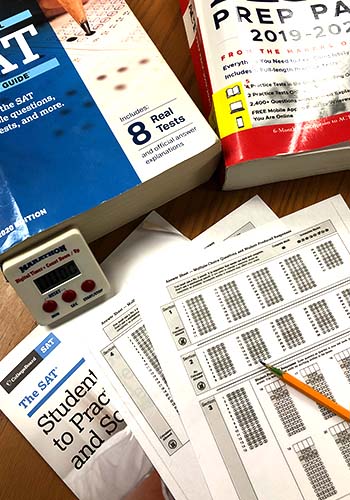
Military schools are often seen as a viable alternative to public education.  Students who succeed in the military school environment tend to be under performing academically due to issues other than learning challenges or disabilities; in other words, students who have developed poor study habits or have lost interest in school.  Due to the problems found in the public education system these students tend to be overlooked, ignored  and left to their own devices to struggle on. Military schools are known for identifying these students and providing the support system necessary for their success.  Mandatory tutorial periods, established study hours in the evening during which recreational activities are halted, communication between teacher and unit leader (drill instructor, company commander, etc) and parents, study hall and lastly punishment such as restriction to campus on weekends for those that fail to show improvement all work together to help achieve academic success.  The record of GPA improvement, SAT scores, percentage of graduates and percentage of graduates accepted to colleges and universities all attest to the success of the military school system.

We invite you to provide comments and tell us what you really think about Public Education.

Learn More about Marine Military Academy as an Alternative to  Public Education

If you are considering an alternative to public education check out the Marine Military Academy  or click on the image below to request information about enrollment.

Contact Us

Posted in General News | Comments Off

Is Your Son Struggling with Grades?

Marine Military Academy:
Helping Boys Who Are Struggling with Grades

struggling with gradesIs your son one of those bright young men who is struggling with grades in school?  Does your son demonstrate the potential for good grades but continually fails to achieve them?

If the answer to these questions is “yes,” then you may want to look at Marine Military Academy as a solution.  Struggling with grades can be the result of a number of factors: lack of personal attention in the classroom, poor study habits, lack of focus on the long-term goal or even low self esteem.  All or some of these factors can contribute to a young man not living up to his academic potential.

Struggling with grades is not something that is unique among teenagers, but many times the conventional school system does not provide the ideal environment or the right tools.

Students Struggling with Grades Need the Right Tools

struggling with gradesStudents struggling with grades should not be assumed to be lazy or uncaring.  A lack of the proper tools or support may be the real reason for the poor grades.

In the case of Marine Military Academy, the right tools and support take on many forms. The first and most important is a faculty dedicated to the success of the student. Small class size allows for more attention by the teacher for each student. With an average class size of about 11 students to each teacher, your son will receive more personal attention to help him learn.

For those that are struggling to keep up their grades, mandatory tutorials ensure that they receive that extra attention and help necessary for success. This attention is passed down to the Company Drill Instructor through daily reports from the teachers. Drill Instructors are aware of those students struggling and check to ensure that assignment are done on time.  Additionally, parents are provided online access to their son’s grades so they can stay informed on a weekly basis and monitor their son’s progress.

Small Successes Help Students Struggling with Grades

Low self-esteem can lead to a student putting forth less effort than is required for success in the classroom.  At Marine Military Academy, we understand that small successes lead to big successes.

A student with low self-esteem usually fails to work harder because he feels that he is not expected to succeed anyway.  Once a student succeeds with the first small task and enjoys the recognition it brings, he is more apt to put forth greater effort on the next task to succeed again. Success breeds success, and each new task completed successfully drives the student to work harder on the next.  Struggling grades become better grades, and the positive cycle continues.

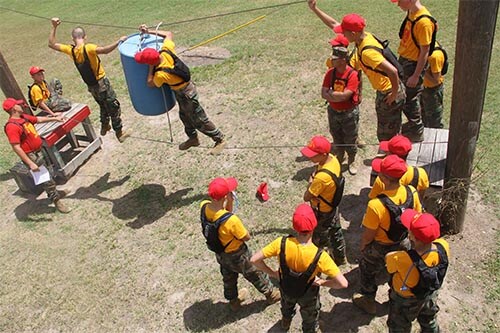
Those students that respond positively are further rewarded through promotion, monthly recognition ceremonies and additional privileges so that the desire to succeed is reinforced. At Marine Military Academy, these successes are not limited to the classroom. Cadets find that both academic and physical challenges that result in success can foster a feeling of high self-esteem. For this reason, cadets are challenged on the Leadership Enhancement and Development Complex just as they are in the classroom. A student that has a fear of heights and learns to overcome those fears while learning to rappel can walk away with a well-earned feeling of pride in himself. Once a cadet learns that he can do what he did not believe possible, all things become possible. For those struggling with grades, this positive feeling can then carry over to his academic pursuits!

Struggling With Grades Can Become a Thing of the Past!

Marine Military Academy is dedicated to your son’s academic success. If he is one of those students struggling with grades, we have a proven track record of success with the average GPA for first-year cadets increasing by 1.71.  In the 2011-2012 school year, 100 percent of Marine Military Academy graduates were accepted to colleges or universities.  Marine Military Academy understands that there is no simply solution or a single answer for students who are struggling to earn good grades. The right structure and discipline as well as the teamwork of parents, teachers, drill instructors and staff can help develop a student where struggling with grades is a thing of the past.

struggling with grades

Check out Marine Military Academy to See How We Can Assist Students Struggling with Grades

Visit the Marine Military Academy Website

Posted in Academics | Tagged | Leave a comment

LEAD Complex Construction

Leadership Enhancement and Development Complex (LEAD Complex) Construction

Maj Harold Compton

There have been a number of comments about the Marine Military Academy Leadership Enhancement and Development (LEAD) Complex concerning its construction, when it was built, who built it, etc. This article will attempt to provide some of the details on how this complex has evolved over the last 12 years into one of the most complete training facilities found anywhere. Although the LEAD Complex was constructed to support the Corps of Cadets and Summer Camp, it was quickly recognized by many other agencies as a premier training facility and is used by many Junior ROTC units throughout the Rio Grande Valley. Local law enforcement agencies also use the LEAD Complex  and in 2008, the U.S. Army began using the facility for their annual summer Cadet Leadership Camp.

LEAD Complex Background

lead complexIn 1998, the MMA president, superintendent and commandant of cadets all had a vision for an outdoor training facility that could provide physical fitness training, help to instill confidence in cadets, foster teamwork among cadets and help them overcome their fear of taking on challenging physical tasks and heights. This complex would be known as the Leadership Enhancement and Development Complex, or LEAD Complex, and would be used for two major purposes: to augment the Marine Corps Junior ROTC program and to be the major focus of the MMA Summer Camp Program.

The initial complex would include just three events: the rappel tower, obstacle course and leadership reaction course. Initial construction was done by a local contractor, and the three events were completed in time for the 1999 summer camp.  Although the Military department staff all had experience in running the Obstacle Course and Leadership Reaction Course, they had no certified rappelmasters to run the Rappel Tower.  In early 1999, a training team from the U.S. Marine Corps Special Operations Training Group, II MEF came to MMA to train an initial cadre of rappelmasters.  MMA then purchased all lead complexthe necessary harnesses, helmets, gloves, carabiners and ropes to conduct training with cadets and summer campers, and rappeling became a prime event with the 1999 summer camp.

The next year, MMA began the next installment of the LEAD Complex and constructed the first segment of the High Ropes event. The intial section included four high events and zipline. It was built on the north edge of the complex close to the Tower. The high poles were set by a local contractor, and after a 30-day period to allow the poles to settle, work began on the rigging. All rigging work was done by MMA staff and was completed in time for the 200 summer camp.  During the first summer of use it was apparent that a complex of this type was instrumental in the success of the MMA Summer Camp program and plans began immediately for additions to it.

LEAD Complex Continues to Grow

In 2000, the initial Climbing Wall was completed on the north face of the tower and was also lead complexopen for business for MMA Summer Camp. An additional nine Low Ropes events were added, which included such events as Low Swinging Log, Nitro Crossing, Triangle Traverse and a 12′ Wall.

The LEAD Complex was quickly becoming a major focus of MMA’s summer camp, being used almost daily by as many as 350 summer campers. Throughout this entire period, the commandant of cadets was instrumental in the planning for future additions to make the LEAD Complex even more challenging and fun!  His experiences with training courses at Marine Corps Recruit Training Depot, Parris Island provided ideas for future expansion.


lead complex

The next event desired was a Circuit Course, and work began on it in early 2005. Work on the Circuit Course was supervised by the Facilities department. However, much of the actual labor was performed by Boy Scouts as part of a cadet’s Eagle Scout project. The work on this event took a little longer to complete as the cadets were only able to work on it about one to one-and-a-half hours each day and on weekends. The work, however, was completed in time for the next summer camp.

The LEAD Complex was quickly taking over the entire Back 40 area! During this same period, and a second set of High Ropes events on the southeastern corner of the complexwas begun and was also completed in time for summer camp.

LEAD Complex Picks Up Speed

lead complexAlthough the LEAD Complex now included five major events, the work was not going to slow down. The commandant of cadets requested the construction of a Confidence Course. Staff members traveled to San Antonio to view the Confidence Course at Camp Bullis, and when they returned they developed a plan that included the associated costs.

With the exception of the setting of the high poles, all work was performed by MMA staff. Poles were ordered and delivered in December 2006 and were immediately set. In January 2007, work began on the assembly of the 13 events on the course. A number of specialized hangers were required, which the Facilities department fabricated. Work progressed quickly, and in March 2007, the course was open to the Corps of Cadets for the first running. The course was added to the summer camp program that year, and campers ran the course several times during the four-week program.

The LEAD Complex was quickly filling up the Back 40 area, but MMA was not finished. A Pugil Sticks pit was constructed, and supports for an overhead netting to block the hot summer sun was added to the event. Work then focused on construction of a Combat Fitness Test Course. This course was set up within the boundaries of the Confidence Course and was first used by the cadets in 2009.

The last event added to the complex was a Rope Bridge.  This event will be added to MMA’s 2012 summer camp!  The Rope Bridge event was improved in early 2012 and will be ready for use this next summer.  The Facilites Department also added a permanent support structure on the top of the Tower for netting to block the sun on the top of the tower when conducting training, which was very appreciated by all of the instructors!

The LEAD Complex is by no mean finished and there are additional events that are being discussed for the future: addition of a second zipline to speed up participants running the event, additional low obstacles on the confidence course and expansion of the climbing walls.  The staff is always looking for new and challenging events to provide the highest level of training to our cadets and enjoyment for our summer campers.

Upgrade and Maintenance of the LEAD Complex

With the number of personnel utilizing the complex, coupled with the weather near the coastline, continual maintenance of the LEAD Complex is vital to ensure its continued use. MMA staff conduct regular inspections and maintenance on the courses to include cable replacement, tightening and adjustment of hardware, painting and replacement of aging lumber and logs. All ropes are replaced when worn, and cargo nets are replaced about every four to five years depending on wear. The High and Low Ropes Courses are required to be inspected by an Association for Challenge Course Technology vendor ever year. Since its construction, MMA’s course has never failed an inspection!

The Climbing Wall was in need of some repairs in 2010, and MMA had a local contractor remove the entire north wall and replace it will an upgraded wall. All climbing holds were replaced at the same time, and the new wall was in use for the 2011 summer camp. The LEAD Complex continues to be an evolving facility, and each year new ideas are proposed to add to and enhance the complex and provide a high level of training to our cadets.

 LEAD Complex Photos

Check out our Summer Camp Multimedia Galleryto see many of the events on the LEAD Complex being run by summer campers.

To learn more about the Marine Military Academy visit our website at http://www.mma-tx.org or request information.

Posted in Military | Leave a comment

Science, Technology, Engineering and Mathematics (STEM)

Marine Military Academy: STEM Program

stemSTEM is an acronym for Science, Technology, Engineering and Mathematics. Recent studies have revealed that the United States is behind many countries in these areas and an increased focus on them is required if we are to retain our position as a world leader. Students must take advanced courses in STEM subjects not only to compete on a global level, but to help them think critically, solve complex problems and drive advancements in science and technology.

Though there is no such thing as a “STEM school,” Marine Military Academy is one school that is pushing STEM education to ensure that our graduates are well prepared for the scholastic challenges at the college level.

The four STEM subjects:

  1. Science –  the study of the natural world, including the laws of nature associated with physics, chemistry, and biology .
  2. Technology -  the entire system of people and organizations, knowledge, processes, and devices that go into creating and operating technological tools.
  3. Engineering - the body of knowledge about the design and creation of products and a process for solving problems.
  4. Mathematics -  the study of patterns and relationships among quantities, numbers, and shapes; both  theoretical mathematics and applied mathematics.

STEM at Marine Military Academy

  • Provides a challenging and rigorous program of study focusing on the application of STEM subjects .
  • Offers courses and pathways for preparation in STEM fields and occupations.
  • Bridges and connects in-school and out-of-school learning opportunities.
  • Provides opportunities for student exploration of STEM related fields and careers.
  • Prepares students for successful post-secondary  education, employment or both.

During the summer of 2010, Marine Military Academy hosted a STEM camp for students in the Rio Grande Valley.  Classes for this camp were provided by Texas State Technical College, located adjacent to MMA. Approximately 150 students attended the one-week program.

Why STEM

U.S. News reports that roughly 30 percent of chemistry and physics teachers in public high schools did not major in these fields and have not earned a certificate to teach those subjects, according to a new survey released Monday by the National Center for Education Statistics (NCES). Half of earth science teachers are similarly unqualified.

For additional information on this issue, check out the National Commission on Mathematics and Science Teaching for the 21st Century

Marine Military Academy has a total of 10 teachers in what are considered the STEM fields. One hundred percent hold degrees, and 80 percent majored or minored is in the field they are currently teaching.  Additionally, 40 percent of those teachers hold advanced degrees in their field, placing MMA well above the national average in teachers for these critical areas.

While the future stability of our economy is unknown, MMA is positioning our graduates to take advantage of the growth in science and engineering jobs. This means MMA graduates will be at an advantage when competing for the high-tech, high-wage jobs of the future.

stem

To learn more about Marine Military Academy, visit our website at http://www.mma-tx.org


Posted in Academics | Tagged | Leave a comment